What this is
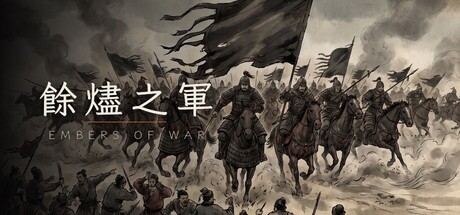
The Tang dynasty has collapsed. Over the next fifteen years northern China goes through five more, and emperors change faster than the horses at the relay stations. You run a mercenary company in the middle of it. Whoever pays, you fight for. Nobody asks what the war is about. Nobody would answer.
Seven theatres, seven factions, each with its own problem to solve. Bandits bring numbers. The Liang bring a shield wall and heavy crossbows behind it. The Shatuo hit both flanks with cavalry. Youzhou's armoured infantry will grind through you without bothering to charge. Chu fields rattan armour and poisoned arrows, the Khitan ride in and ride out, and the Southern Han have elephants. Pick a road north. Take contracts, fight, resupply in town, recruit, buy gear, and eventually reach the Black Banner's camp. The main line takes about two hours. Then you start again on a different road, with different contracts, different enemy formations, and different people picked up along the way. Dead soldiers do not come back. Neither does your save.
How battles work
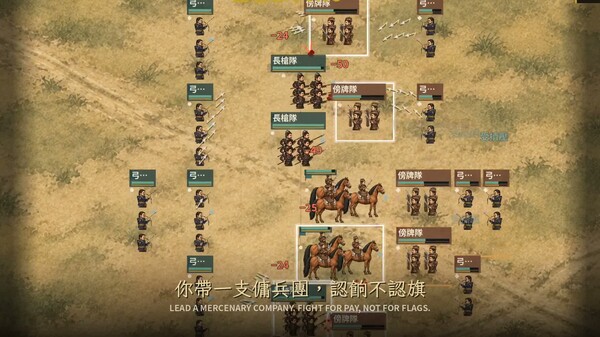
Real time, pause whenever you like. The field is sixteen lanes wide and nine deep. Some battles have a rocky hill across the middle, some leave only a narrow corridor on each flank wide enough for horses. You decide which lane each unit holds and when it moves.
You get seven unit types of your own. Shield-bearers stand in front and take it. Spearmen brace against cavalry. Archers shoot. Crossbowmen shoot through armour. Horsemen charge. The ballista reaches across the field. Drummers keep everyone else from running. Anything else you want, you pick up on the battlefield: when enemy morale breaks they rout, and routed men can be recruited on the spot. The man who was trying to kill you yesterday draws your pay today. Nobody in this century finds that strange.
Hitting the enemy head-on is usually how you lose. Winning means finding the gap in their line and going through it before the flanks close.
The men
Every soldier has a name, a background, a temperament and a nickname. Deserters, debtors, farmers who enlisted because the alternative was starving. Survivors level up, levelling gives you points to spend, and at certain levels each man picks a path. Two spear companies can end up doing very different jobs: one braces and counters cavalry, the other strikes first on contact. At night in camp they talk to you. Sometimes it is useful. Mostly it is about the food.
Contracts let you raise the stakes by betting on a specific veteran to finish the job alive. Win the bet and the pay goes up. Lose it and his name goes on the roll of the fallen, and there is one less share to pay out. The books balance. The man is gone.
If you would rather not command every fight yourself, send a detachment out on commission and read the report when it comes back, if it comes back. You can also leave men to garrison a holding for income. Holdings get attacked now and then, and you decide whether to go.
From deserter to military governor
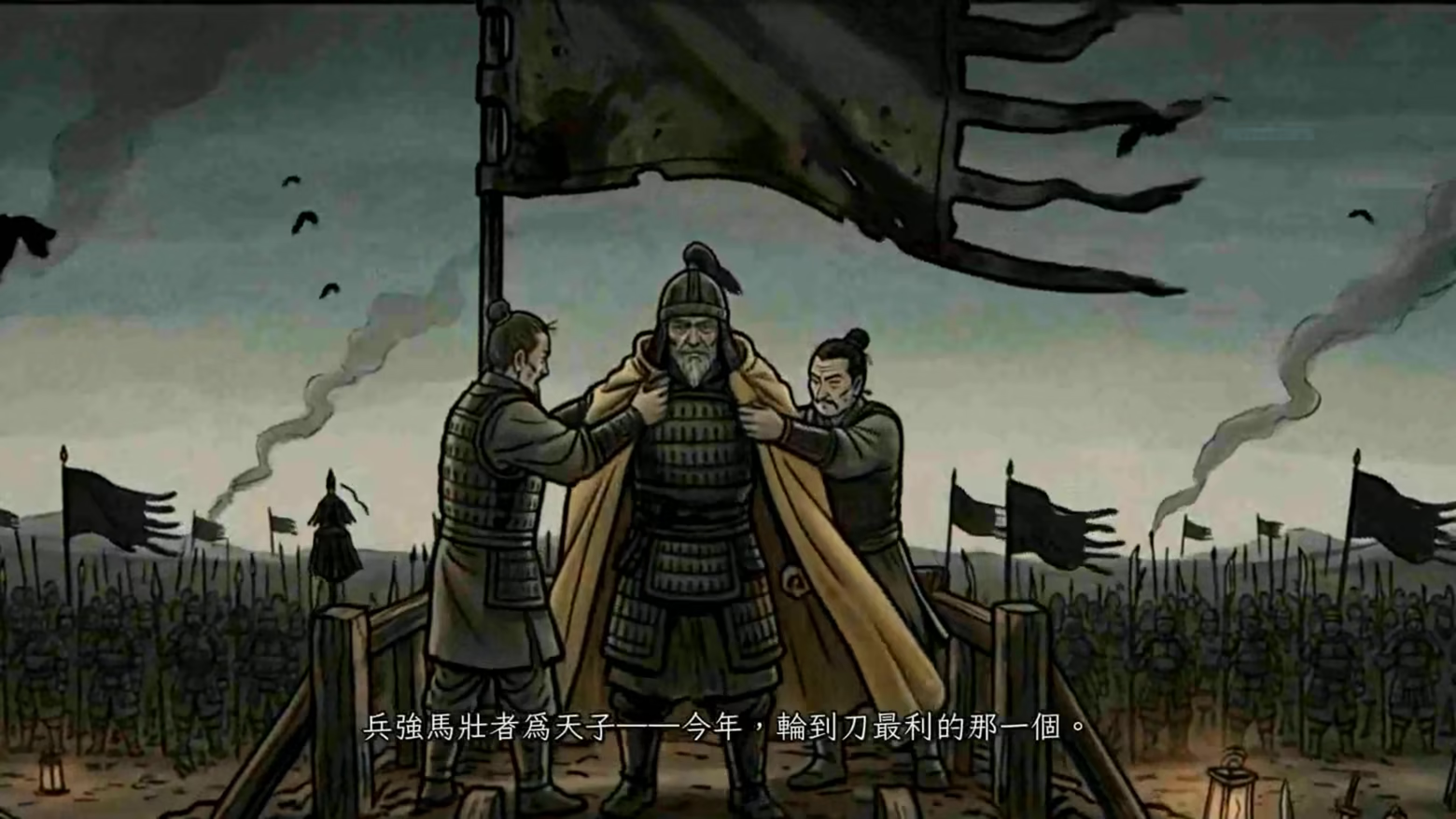
Rank is bought. There is no other way to get it this century. You climb from squad leader one grade at a time, and at every grade a Black Banner army is standing in the road. That banner flattened your old camp once. Now you grind your way back up to it. The last battle puts you in front of the man himself, and whether you take him depends on how many men and how much money you managed to keep. If neither is enough, at least the roll of the fallen will be impressive.
Other things
Researched Five Dynasties setting. Unit designations, theatres and faction tactics are drawn from the sources. The research will not help you win
Ink-wash art, animated cutscenes on the main line
Single-player. No multiplayer. Nobody is coming to help
About two hours per run, built to be replayed
The ash is not cold yet. There is one breath left in it. One breath is enough to raise an army.